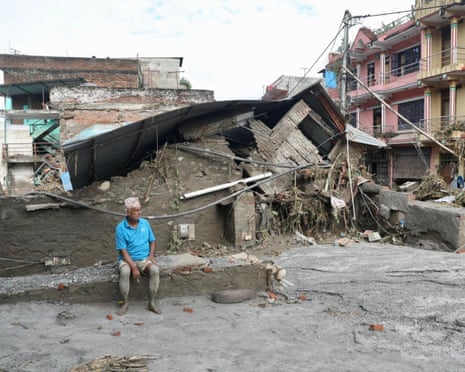
This concern for Jammu and Kashmir after the Nepal tragedy is not imaginary. A study by Kashmir University published in the ‘Journal of Glaciology’ studied 155 glacial lakes using satellite data from 1992 to 2024. Bramsar, Chirsar, Nandkol, Gangabal and Bhag were identified as the lakes most at risk. glacial lakes Are. There is a “very high risk” of these five lakes suddenly bursting.
These lakes at high altitude are like ‘ticking time bombs’, which threaten the valleys below. Let us know who those lakes are.
- Bramsar (Kulgam District): Due to its proximity to the retreating glacier, it is spreading rapidly.
- Chirsar (Kulgam District): This poses a direct threat to the population living in low-lying areas in South Kashmir.
- Nandkol (Ganderbal District): It is part of a network system connected to the flow of water, due to which several lakes can flood simultaneously.
- Gangabal (Ganderbal District): The largest lake in terms of area and volume of water, it poses a major threat to the hydroelectric projects located downstream.
- Bhagsar (Shopian District): This lake is located right above important communication lines, bridges and infrastructure.
Which lakes are in Kashmir?
There are thousands of high altitude glacial lakes (lakes formed by melting snow) in the areas of Jammu and Kashmir and Ladakh. These lakes are formed by the melt water of retreating glaciers in the Greater Himalaya, Karakoram, Zanskar and Pir Panjal ranges. Most of the glacial lakes in Kashmir are at high altitude (over 3,000 metres) and are mainly accessible by trekking routes, such as the ‘Kashmir Great Lakes Trek’.
Gangbal and Nandakol Lakes: Located at the foothills of Mount Harmukh in Ganderbal district, these lakes receive water directly from the Harmukh glacier system.
Tarsar and Marsar Lakes: Twin glacial lakes located near Pahalgam (Anantnag district), which are fed by snow and glaciers of high mountain areas.
Vishansar and Krishnasar Lakes: The high altitude glacier fed lakes near Sonamarg drain into the Kishanganga/Neelum river basin.
Sheshnag Lake: A pro-glacial lake (a lake formed in front of a glacier) lying on the way to the Amarnath cave temple, formed by melting glaciers and water flowing from the mountains.
Which lakes are in Ladakh?
The Union Territory of Ladakh has more than 3,000 glacial reservoirs and lakes whose water does not flow out (endorheic lakes). These lakes are formed or formed by glacier melting in the dry trans-Himalayan ecosystem.
Pangong Tso and Tso Moriri: High altitude salt water lakes, fed in part by meltwater from nearby glaciers.
Drang-Drung Glacial Lakes: Dynamic pro-glacial and moraine-dam lakes (glacial debris lakes) formed at the end of the Drang-Drung Glacier near Pensy La Pass in Zanskar.
Rumbak and Kyagar Tso Lakes: Reservoirs located at high altitude in Ladakh and Zanskar ranges, which are fed by streams formed by melting glaciers.
Jammu region Seven lakes of Poonch and Rajouri (Pir Panjal ranges): These include mountain glacial lakes like Nandan Sar, Sukh Sar and Chandan Sar, which are located at an altitude of more than 3,500 meters in the Pir Panjal ranges.
According to experts, there is a double danger in Kashmir because these glacial lakes are present. At the same time, these areas are also sensitive to earthquakes, that is, due to any earthquake of high intensity, their boundary walls, which are made of pebbles, stones, soil, can break and then pose a threat to the population and construction located below them.
According to environmental expert Ajaz Rasool, due to global warming, these glaciers are melting faster than their speed and this directly means that more water gets accumulated and when this water suddenly moves towards an area at full speed, then a tragedy like Nepal is seen.